Inside the Kirkland Signature Machine: How Costco Built a Private Label That Outperforms the Competition
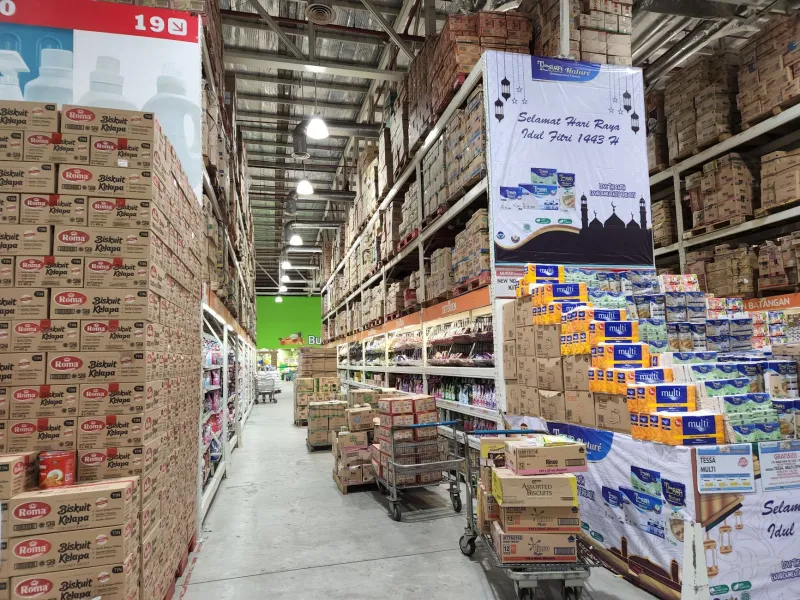
Walk into any Costco and you'll notice something a little unusual. Shoppers aren't just grabbing the name brands — they're loading up their flatbed carts with Kirkland Signature olive oil, Kirkland Signature vitamins, and Kirkland Signature toilet paper with the same confidence they'd reserve for a household name. That kind of loyalty doesn't happen by accident. It's the result of decades of deliberate quality engineering, and it's worth unpacking.
Kirkland Signature launched in 1992, named after Costco's original headquarters in Kirkland, Washington. Since then, it's grown into a brand that generates over $50 billion in annual sales — more than Nike, Budweiser, or Pampers individually. But what actually goes into making a Kirkland product? And why do so many of them genuinely stack up against — or beat — the premium alternatives?
The Same Factories, Different Labels
Here's one of the worst-kept secrets in the consumer goods industry: many Kirkland Signature products are manufactured by the exact same companies that produce name-brand goods. We're not talking about knockoff operations — we're talking about the actual brands themselves.
Stonyfield and other premium dairy producers have been linked to Kirkland's organic yogurt line. Duracell has been widely reported as a supplier behind Kirkland's batteries. Grey Goose's master distiller has publicly acknowledged a relationship with Kirkland's French vodka. And Jelly Belly? Long rumored to be behind those Kirkland gourmet jelly beans sitting in the snack aisle.
The reason this happens is straightforward: these manufacturers have excess production capacity, and Costco offers them a deal they can't easily refuse — massive, consistent volume orders with minimal marketing overhead. The brand gets guaranteed revenue. Costco gets premium-quality goods at a lower unit cost. And the shopper gets a product that's virtually identical to the premium version at a significantly lower price point.
Costco's Non-Negotiable Quality Standards
Of course, not every Kirkland product comes from a household name manufacturer. Some are produced by specialized suppliers who work exclusively or primarily with Costco. In those cases, Kirkland's internal quality team takes center stage — and they're not known for cutting corners.
Former Costco buyers and industry insiders have described a procurement process that's notably more demanding than what most retailers require. Before a supplier earns a Kirkland Signature contract, they typically undergo a thorough vetting process that includes facility audits, ingredient sourcing reviews, and side-by-side product testing against the leading national brands in that category.
The benchmark Costco uses is telling: a Kirkland product isn't approved unless it meets or exceeds the quality of the market leader. That's not a marketing slogan — it's reportedly a documented internal standard. If the Kirkland version of a product can't hold its own in blind taste tests or performance evaluations, it doesn't go to market.
The Supplement Side of the Story
Few Kirkland product categories have attracted more scrutiny — or more praise — than health supplements. The supplement industry is notoriously loosely regulated in the United States, and plenty of store brands have been caught selling products that don't match their labels. Kirkland has largely avoided that reputation.
Kirkland Signature supplements are frequently verified by USP (the U.S. Pharmacopeia), a nonprofit scientific organization that sets standards for supplement quality, purity, and potency. That USP seal on a bottle of Kirkland fish oil or glucosamine is genuinely meaningful — it tells you the product contains what it claims to contain, in the amounts listed, without harmful contaminants. Many name-brand supplements don't bother with that level of third-party verification.
Consumer Reports and other independent testing organizations have repeatedly found Kirkland vitamins and supplements performing on par with or better than premium alternatives that cost significantly more per serving.
Why the Price Is Lower (Without the Quality Taking a Hit)
So if the quality is comparable, why is the price so much lower? It comes down to the economics of how Costco operates.
First, Kirkland products don't carry traditional advertising costs. There are no Super Bowl commercials, no celebrity endorsements, no national billboard campaigns. The savings from eliminating that marketing spend get passed directly to the consumer.
Second, Costco operates on a membership model, which means the company earns revenue from membership fees rather than relying entirely on retail markups. That structure allows Costco to keep product margins razor-thin compared to traditional grocery or big-box retailers.
Third, the sheer volume Costco moves through its warehouses gives it extraordinary purchasing leverage. When you're ordering tens of millions of units, you get pricing that individual retailers can only dream about — and again, those savings flow downstream to the shopper.
What to Watch Out For
Kirkland Signature's track record is impressive, but it's worth being clear-eyed about a few nuances. Not every Kirkland product is manufactured to the same exacting standard, and the brand has a broader range of categories than any single supplier or quality team can perfectly oversee.
Some shoppers have noted that Kirkland products occasionally change suppliers or formulations without much fanfare. If a product you've loved suddenly tastes different or performs differently, that's worth paying attention to. Consumer forums and communities dedicated to Costco shopping are genuinely useful for tracking those kinds of changes.
It's also worth noting that for certain specialty items — specific dietary needs, niche flavor profiles, or highly personalized categories like skincare — a name brand that's been formulated for your specific situation might still be the better call. Kirkland excels at delivering excellent quality across a broad range, but "broad range" and "perfect for every individual" aren't always the same thing.
The Bottom Line on Kirkland's Quality Promise
What makes Kirkland Signature genuinely remarkable isn't just that it's affordable — plenty of cheap store brands exist. What sets it apart is the combination of low price and consistently high quality, backed by a procurement philosophy that treats the Kirkland name as something worth protecting.
Costco has staked a significant portion of its business model on shoppers trusting Kirkland Signature enough to keep renewing their memberships and filling those oversized carts. That financial incentive has pushed the company to maintain standards that most private labels don't bother with.
For everyday American families trying to stretch a grocery budget without sacrificing quality, that's a genuinely valuable thing. The next time you're standing in a Costco aisle wondering whether the Kirkland version is "really as good," the honest answer — backed by factory relationships, third-party testing, and decades of consumer experience — is that it usually is.