Cart Before the Sample: Why Costco Members Trust Kirkland Signature Before They've Tasted a Thing
There's a specific kind of confidence that Costco members carry through the warehouse. They'll toss a 48-pack of Kirkland Signature AA batteries into their cart without a second thought. They'll grab the two-pound tub of Kirkland Greek yogurt even if they've never eaten a single spoonful. They'll load up on Kirkland Signature olive oil, paper towels, or vitamins — products they've never personally tested — and feel genuinely good about the decision.
This isn't reckless shopping. It's actually something more interesting: a form of brand trust so deeply embedded that the usual consumer instinct to sample, compare, or research gets bypassed almost entirely. And figuring out why that happens tells you a lot about what Kirkland Signature has quietly built over the past three decades.
The Reputation That Arrives Before the Product Does
For most store brands, reputation is a liability. Shoppers assume generic means inferior — a compromise you make when money's tight. Kirkland Signature somehow flipped that script.
Ask any longtime Costco member and you'll hear some version of the same thing: "If it's Kirkland, it's good." That's not a slogan. It's a piece of cultural shorthand that gets passed around at dinner parties, in neighborhood Facebook groups, and in the comments of every Costco-related Reddit thread. By the time a new member walks into a warehouse for the first time, they've already absorbed a general impression that Kirkland products are reliable — often before they've bought a single one.
That kind of pre-loaded reputation is extraordinarily hard to manufacture. Kirkland didn't build it through advertising. There are no Kirkland Signature Super Bowl commercials, no celebrity endorsements, no influencer campaigns. The reputation travels person to person, rooted in real experiences that get shared because people are genuinely surprised something worked so well.
Social Proof on a Warehouse Scale
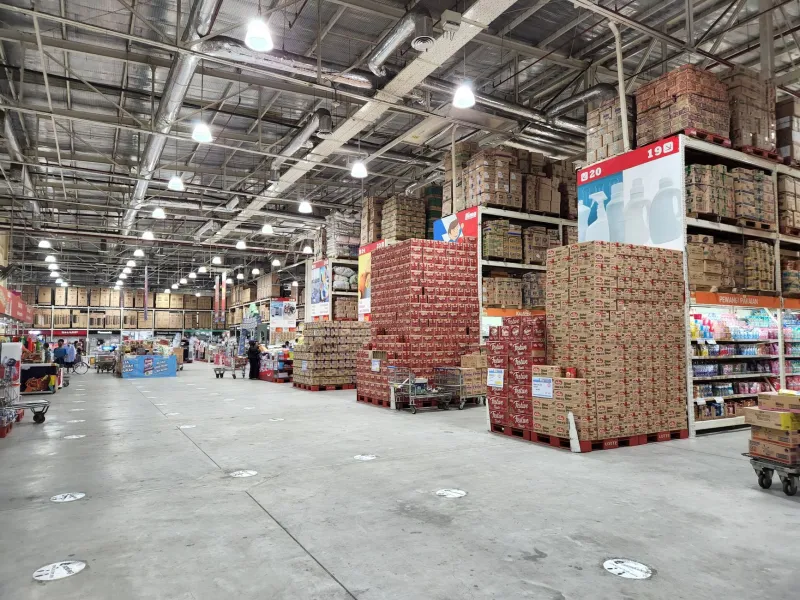
Walk through a Costco on a Saturday afternoon and social proof is everywhere — and it's not subtle. When you see a pallet of Kirkland Signature bacon stacked six feet high and half of it already gone at 10 a.m., you don't need a taste test. The crowd has already voted.
This is part of what makes the Costco shopping environment uniquely powerful for Kirkland. In a typical grocery store, you can't easily gauge what other shoppers are buying. At Costco, the warehouse format makes popularity visible. High-traffic items are restocked in bulk and often positioned in high-traffic aisles. When something moves fast, you can see it moving fast — and that visibility works as its own form of endorsement.
Add to that the member community that's grown up around Costco culture. Dedicated Facebook groups with hundreds of thousands of members, subreddits where people post their hauls, YouTube channels devoted entirely to Costco finds — all of it amplifies individual experiences into something that feels like collective consensus. When a Kirkland product gets praised in those spaces, it's not one person's opinion. It reads like a verdict.
The Quality Floor That Changes the Calculus
Part of what makes blind trust in Kirkland rational — not just emotional — is that the brand has established a genuine quality floor. Over the years, members have learned that Kirkland products don't tend to be bad. They might occasionally be slightly different from a name-brand equivalent, but they're rarely disappointing in the way that some generic products can be.
That consistency changes how people approach new Kirkland items. When your baseline assumption is "this will probably be fine, and might actually be great," the risk of trying something new drops significantly. You're not gambling — you're making a reasonable prediction based on a track record.
Costco reinforces this dynamic with its return policy, which is famously generous. Knowing you can return a product you don't like — even after opening it — removes the last remaining barrier to trying something untested. The financial downside of being wrong is essentially zero, which makes the leap of faith even easier to take.
Why the Sample Table Isn't Always the Point
Costco is famous for its sample stations, and they do influence purchases. But here's something worth noting: for Kirkland Signature specifically, the sample often isn't what closes the deal. Plenty of members will walk past a Kirkland sample station and toss the product in their cart before even stopping to try it.
That behavior reveals something important. For a lot of shoppers, the sample table is a discovery tool — a way to learn about something you didn't already know you wanted. But when you already trust the brand, discovery happens differently. You see a new Kirkland product on the shelf, recognize the label, and think: they probably got this right. The sample becomes optional.
This is a genuinely unusual position for any brand to occupy, let alone a store label. National brands spend enormous amounts of money trying to get consumers to that point of automatic trust. Kirkland got there largely by delivering consistent quality and letting word of mouth do the rest.
The Self-Reinforcing Loop
Here's where it gets particularly interesting: blind loyalty, when it's rewarded, deepens the loyalty. A member grabs a Kirkland product they've never tried, brings it home, and it turns out to be great. That experience doesn't just satisfy them — it confirms the mental model they already had. Of course it was good. It's Kirkland.
That confirmation gets folded back into the reputation. They tell a friend. They post about it. They buy it again without hesitation. The cycle continues.
And when the occasional product doesn't land perfectly? The strong prior reputation absorbs the disappointment. One miss doesn't unravel decades of goodwill — it gets filed away as an exception rather than evidence of a pattern.
What This Means for the Average Costco Shopper
If you've ever found yourself throwing a Kirkland product into your cart based entirely on vibes and a vague sense that "Kirkland is good," you're not being irrational. You're responding to a real and well-earned track record, filtered through one of the most effective word-of-mouth ecosystems in American retail.
That said, it's worth staying a little curious. Not every Kirkland product is equally beloved — some categories are stronger than others, and personal preferences obviously vary. The trust is well-founded, but it's still worth paying attention to what's in your cart and whether it's actually working for your household.
The Kirkland loyalty paradox isn't really a paradox at all. It's what happens when a brand earns enough consistent trust that the usual friction of decision-making simply dissolves. That's a hard thing to build — and it's why Kirkland Signature keeps showing up in carts before it ever shows up on a plate.